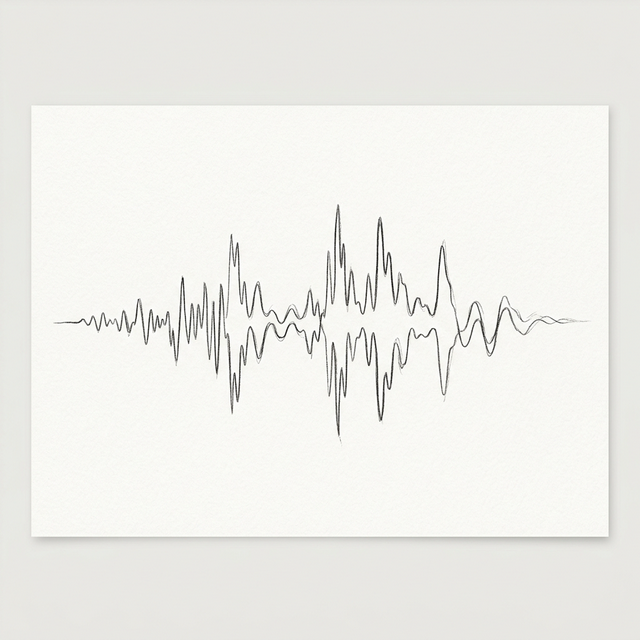
Inside the MP3: Understanding Frames and the Bit Reservoir
While most of us interact with MP3s as simple files, they are actually a continuous stream of independent "Frames." This architecture is what allowed early digital radio and the first internet streams to work—if you lose a piece of the file, the rest can still play. But within this structure lies a fascinating piece of engineering called the **Bit Reservoir**. Let's go under the hood of the MPEG-1 Layer III format to see why it was so revolutionary for its time.
The Anatomy of an MP3 Frame
Every MP3 file is made of thousands of frames, each lasting about 26 milliseconds at 44.1kHz. Every frame starts with a "Header"—a 32-bit sequence that tells the player the bitrate, sample rate, and channel mode. This makes MP3 files "self-healing." You can literally cut an MP3 in half and both halves will be playable. This made MP3 the perfect format for the early, unstable internet where "packet loss" was a frequent reality.
The Bit Reservoir: Saving for a Rainy Day
The biggest challenge in audio compression is that some parts of a song are much "harder" to encode than others. A silent gap requires very few bits, while a complex orchestral swell requires every bit available. In a "Constant Bitrate" (CBR) file, every frame has the same number of bits. This would normally lead to poor quality in complex parts. The **Bit Reservoir** solves this by allowing a frame to "borrow" unused bits from previous frames. It’s like a digital savings account. When the music is simple, the encoder saves bits; when it gets complex, it spends them to maintain transparent quality.
VBR: The Ultimate Evolution
Modern encoders (like the LAME engine we use on this site) use **Variable Bitrate (VBR)**. Instead of following a strict budget per frame, VBR determines the required bits based on the complexity of the audio. On our **Online Converter**, we recommend using VBR "-V 0" (the highest quality setting) for the best balance of file size and fidelity. It's the most sophisticated way to use the MP3 frame architecture, ensuring that your audio sounds great from the first frame to the last.
Conclusion
The MP3 wasn't just a compression trick; it was a masterclass in stream-based architecture. Understanding frames and reservoirs helps us appreciate why this 30-year-old technology is still the foundation of our digital world. Even as we move toward newer formats, the lessons learned from the MP3 frame structure continue to influence how we build the next generation of audio tech.